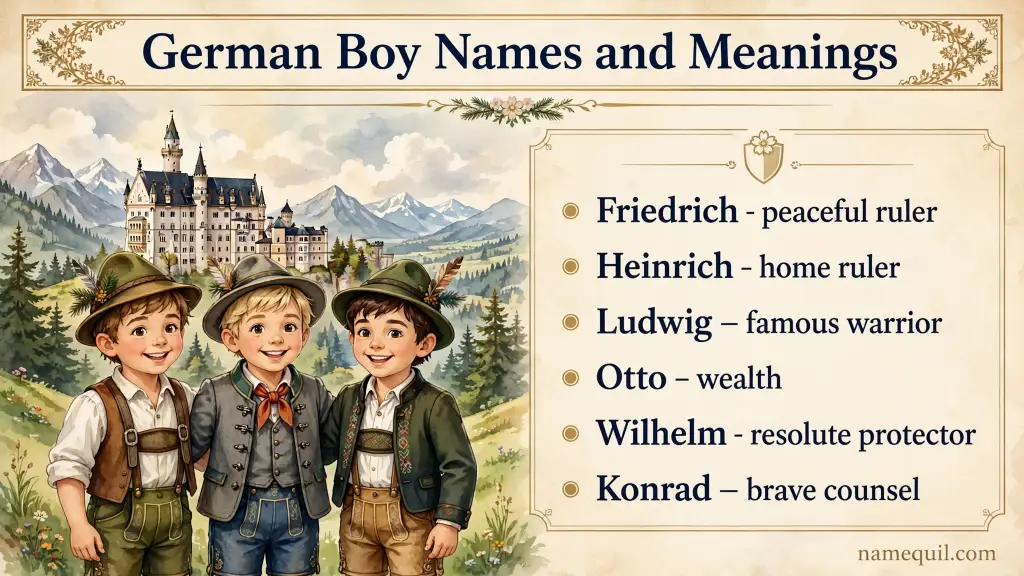
German boy names and meanings offer a wide range of choices, from strong traditional names like Friedrich and Heinrich to short, modern favorites like Finn and Leon.
Many German names have roots in Old High German, ancient Germanic languages, or other European traditions. Their meanings often relate to strength, bravery, peace, leadership, or noble character.
This guide explores traditional German boy names, rare choices, modern favorites, and names with powerful meanings. It also explains their origins and helps you choose a name that fits your family’s preferences.
Best German Boy Names and Meanings
The best German boy names combine clear meanings, a strong history, and a style that feels right today. Some are rooted in old Germanic words, while others entered German naming traditions through Christianity or neighboring European cultures.
Here are some excellent choices to explore first.
- Friedrich: Peaceful ruler.
- Heinrich: Ruler of the home.
- Ludwig: Famous warrior.
- Konrad: Brave counsel.
- Wilhelm: Resolute protector.
- Bernhard: Brave as a bear.
- Leon: Lion.
- Felix: Happy or fortunate.
- Maximilian: Greatest.
- Friedemann: Peaceful man.
- Otto: Wealth or fortune.
- Albrecht: Noble and bright.
- Siegfried: Victory and peace.
- Theodor: Gift of God.
- Bruno: Often associated with brown.
Name meanings can vary by historical spelling, language, and source. Some meanings reflect old Germanic name elements rather than direct translations of modern German words.
Traditional German Boy Names With Meanings
Traditional German boy names often come from Old High German and earlier Germanic languages. Many were formed from two name elements that expressed hopes for strength, protection, leadership, or peace. These names also have connections to medieval records and European history.
- Adalbert: Noble and bright.
- Albrecht: Noble and bright.
- Bernhard: Brave as a bear.
- Berthold: Traditionally associated with brightness and rule.
- Dietrich: Ruler of the people.
- Eberhard: Strong or brave as a wild boar.
- Erhard: Associated with honor, strength, or firmness.
- Friedrich: Peaceful ruler.
- Gerhard: Strong spear.
- Günther: A traditional Germanic name associated with battle.
- Hartmann: Strong or brave man.
- Heinrich: Ruler of the home.
- Hermann: Army man or warrior.
- Konrad: Brave counsel.
- Leopold: Traditionally associated with bravery and the people.
- Lothar: Renowned warrior.
- Ludwig: Famous warrior.
- Manfred: Commonly interpreted as a man of peace.
- Reinhard: Traditionally associated with strength or brave counsel.
- Siegfried: Victory and peace.
- Ulrich: Prosperity and power.
- Volker: A traditional Germanic name associated with people and warriors.
- Walther: Ruler of the army.
- Werner: Traditionally associated with a defending warrior.
- Wilhelm: Resolute protector.
These names are suitable if you want a connection to German history, traditional spelling, or a classic European feel. Heinrich, Konrad, Friedrich, and Wilhelm are excellent starting points.
German Boy Names That Mean Strong, Brave, or Powerful
Germanic naming traditions offer several names associated with courage, strength, and leadership. Many older names combine elements linked to weapons, battle, firmness, or power. Their meanings are symbolic rather than predictions of a child’s personality.
- Bernhard: Brave as a bear.
- Eberhard: Strong as a wild boar.
- Gerhard: Strong spear.
- Hartmut: Traditionally associated with strength of spirit.
- Hermann: Army man or warrior.
- Konrad: Brave counsel.
- Leonhard: Brave as a lion.
- Reinhard: Often linked to brave or strong counsel.
- Siegfried: Victory and peace.
- Sigmund: Victory and protection.
- Theobald: Bold among the people.
- Walther: Ruler of the army.
- Werner: Associated with a warrior or defender.
- Wolfgang: Traditionally interpreted through wolf and path elements.
- Arnold: Associated with eagle and power elements.
Best choices: Leonhard has a bold, recognizable sound, while Konrad feels concise and traditional. Bernhard and Eberhard suit readers who prefer older Germanic names with animal imagery.
German Boy Names That Mean Peace
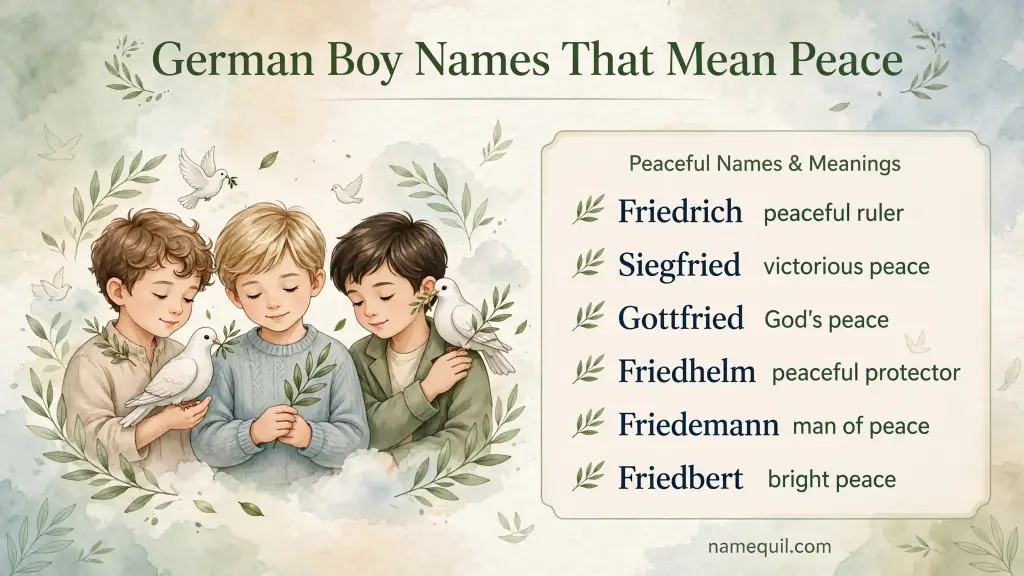
Germanic names also express hopes for peace, harmony, and a stable life. These meanings are appealing if you want a name that feels strong without suggesting battle or aggression.
- Friedrich: Peaceful ruler.
- Friedemann: Peaceful man.
- Friedhelm: Traditionally associated with peace and protection.
- Friedrich Wilhelm: A combination associated with peaceful rule and resolute protection.
- Manfred: Commonly interpreted as a man of peace.
- Wilfried: Traditionally associated with peace.
- Siegfried: Combines elements associated with victory and peace.
The historical Germanic element related to fridu is associated with peace or protection. The exact interpretation depends on the name’s original form and historical development.
Best choice: Friedrich is a strong option if you want a well-established German name with a peace-related meaning. Wilfried is worth considering if you prefer a traditional name that may be less familiar in some English-speaking countries.
German Boy Names That Mean Ruler, Leader, or Noble
Some traditional German names reflect authority, noble status, or the ability to lead. These meanings often come from name elements used across early Germanic-speaking societies.
- Adalbert: Noble and bright.
- Albrecht: Noble and bright.
- Friedrich: Peaceful ruler.
- Heinrich: Ruler of the home.
- Leopold: Traditionally associated with bravery and the people.
- Ludwig: Famous warrior.
- Otto: Wealth or fortune.
- Richard: Powerful or brave ruler.
- Theobald: Bold among the people.
- Ulrich: Prosperity and power.
- Wilhelm: Resolute protector.
If you prefer a regal and formal sound, choose Friedrich, Heinrich, or Leopold. For a shorter name with a long history, Otto is an appealing alternative.
Modern German Boy Names and Meanings
Modern German naming includes both long-standing German names and international names used across Europe. A name can be popular in Germany without having originated in the German language. Biblical names and names shared with other European cultures have long been part of German naming traditions.
- Ben: Often a short form of Benjamin, meaning son of the right hand.
- Finn: A familiar European name with several possible origins and interpretations.
- Felix: Happy or fortunate.
- Jonas: A form of Jonah, associated with the meaning dove.
- Leon: Lion.
- Lukas: A German form of Lucas, traditionally associated with Lucania.
- Matteo: An Italian form of Matthew, meaning gift of God.
- Max: Greatest, when derived from Maximilian or Maximus.
- Noah: Often interpreted as rest or repose.
- Paul: Small or humble.
- Theo: Often a short form of Theodor or another name containing the same element.
- Emil: A German-used form of the Roman name Aemilius.
- Oskar: A European name whose deeper origin is debated.
- Anton: A German-used form of Antonius.
- Elias: A form of Elijah, meaning my God is Yahweh.
These names work well if you want something familiar in German-speaking countries without choosing a name that feels strictly medieval or historical. Their meanings reflect their underlying language origins, not necessarily German translations.
Short German Boy Names With Meanings
Short names are easy to spell, easy to remember, and often work well across languages. These choices include German forms, names commonly used in Germany, and short forms of longer traditional names.
- Arno: A traditional German-used name related to Arnold.
- Ben: Often a short form of Benjamin.
- Bruno: Commonly associated with brown.
- Erik: A German-used form of a Scandinavian name traditionally interpreted as a powerful or eternal ruler.
- Finn: A short, familiar name used in Germany and beyond.
- Hugo: Mind, spirit, or intellect.
- Jan: A German and European form of John, meaning God is gracious.
- Karl: A German form of Charles, traditionally associated with a free man.
- Kurt: A German short form related to Konrad.
- Leo: Lion.
- Leon: Lion.
- Max: Greatest, when derived from Maximilian or Maximus.
- Nils: A Scandinavian-origin name also used in Germany, related to Nicholas.
- Oskar: A familiar European name with a debated deeper origin.
- Otto: Wealth or fortune.
- Paul: Small or humble.
- Till: A German name with historical associations.
- Udo: A traditional Germanic name related to elements associated with wealth or prosperity.
Our picks: Choose Leo or Max for a very short, familiar name. Otto and Kurt are excellent if you like a vintage German style.
Rare and Unique German Boy Names
Rare German boy names can give you a distinctive choice without relying on an invented spelling. Some are old Germanic names that are less familiar today, while others remain recognizable through literature, history, or regional traditions.
- Adalwin: A traditional Germanic name associated with nobility and friendship.
- Anselm: Traditionally interpreted as divine protection.
- Armin: A historic name with an uncertain or debated origin.
- Balduin: German form of Baldwin, traditionally interpreted as a bold friend.
- Bodo: A traditional Germanic name with historical use.
- Eckhard: Associated with a sword or blade and firmness.
- Falk: Falcon.
- Gero: A short traditional Germanic name with historical usage.
- Hartwig: Traditionally linked to strength and battle.
- Ingo: A Germanic name associated with the historical name element Ing.
- Kuno: A traditional short form related to Konrad.
- Luitpold: A historic German name related to Leopold.
- Meinhard: Traditionally associated with strength and counsel.
- Rainer: A German-used form of a Germanic name associated with advice and an army.
- Wendelin: A traditional German name associated with historical German-speaking regions.
- Wolfram: A Germanic name combining elements associated with a wolf and a raven.
For a distinctive name that remains relatively easy to pronounce, consider Falk, Kuno, or Anselm. If you want a longer and more historical sound, Luitpold or Wolfram may be a better fit.
Rarity varies by country, region, and year. These are distinctive options, not a verified ranking of the least-used names in Germany.
Old German Boy Names and Their Meanings
Old German and Germanic names often carry a strong historical feel. Their original elements may refer to protection, weapons, leadership, animals, or personal virtues. Modern spellings can differ from the forms used centuries ago.
- Adalbert: Noble and bright.
- Anselm: Traditionally interpreted as divine protection.
- Eberhard: Strong as a wild boar.
- Ekkehard: Historically associated with a sword or blade and firmness.
- Friedrich: Peaceful ruler.
- Gerhard: Strong spear.
- Gottfried: God’s peace or peace of God.
- Hartwig: Traditionally associated with strength and battle.
- Heinrich: Ruler of the home.
- Hildebrand: Traditionally associated with battle and a sword.
- Liutger: A historic Germanic name associated with people and a spear.
- Ludwig: Famous warrior.
- Siegbert: Often interpreted through victory and brightness.
- Siegmund: Victory and protection.
- Wolfram: Wolf and raven.
These names are useful if you want a connection to medieval Europe, German literature, or historic German naming customs. Some interpretations are reconstructed from old language elements, so they should not always be treated as exact word-for-word translations.
German Boy Names Inspired by Nature and Animals
Nature-inspired German names range from direct word names to older names that contain animal-related elements. If you prefer a name with a clear image or symbol behind it, these options offer several different styles.
- Falk: Falcon; a direct German word name.
- Wolf: Wolf; a direct German word that also appears in traditional names.
- Wolfgang: A historic name traditionally interpreted through wolf and path elements.
- Wolfram: A Germanic name associated with wolf and raven elements.
- Bernhard: Brave as a bear.
- Leonhard: Brave as a lion.
- Arnold: Traditionally linked to eagle and power elements.
- Bruno: Often linked to brown, making it a possible earthy choice.
- Hartmut: A traditional name associated with strength or firmness of spirit.
Best choices: Falk is short and distinctive. Wolf is bold and direct, while Leonhard offers a traditional name with a lion-related interpretation.
German Boy Names With Biblical or Christian Connections
Not every German boy name is Germanic in origin. Biblical names and names associated with Christian traditions have been used in German-speaking communities for centuries. These names may suit families who want a familiar European form with religious or historical significance.
- Johann: German form of John, meaning God is gracious.
- Johannes: A traditional German form of John.
- Matthias: A form of Matthew, meaning gift of God.
- Michael: From Hebrew, meaning Who is like God?
- Gabriel: From Hebrew, commonly interpreted as God is my strength.
- Daniel: From Hebrew, meaning God is my judge.
- David: From Hebrew, traditionally understood as beloved.
- Noah: A Hebrew-origin biblical name often interpreted as rest or repose.
- Elias: A form of Elijah, meaning my God is Yahweh.
- Theodor: A German form of Theodore, meaning gift of God.
- Christian: A name derived from a word for a follower of Christ.
- Nikolaus: German form of Nicholas, traditionally interpreted as victory of the people.
If you prefer a distinctly traditional German form, Johann, Johannes, and Matthias are strong options. If you want a name that is easy to recognize internationally, Daniel, David, or Gabriel may suit you better.
German Boy Names With Beautiful Meanings
A meaningful name does not need to sound forceful or grand. Some German-used names suggest happiness, hope, peace, friendship, or a gift.
- Felix: Happy or fortunate.
- Friedrich: Peaceful ruler.
- Friedemann: Peaceful man.
- Gottfried: God’s peace or peace of God.
- Hugo: Mind, spirit, or intellect.
- Konrad: Brave counsel.
- Matthias: Gift of God.
- Theodor: Gift of God.
- Wilfried: Traditionally associated with peace.
- David: Beloved.
- Jonas: Dove.
- Leon: Lion.
For a gentle meaning, Felix and Friedemann are worth considering. Theodor and Matthias are good options if the idea of a gift is especially meaningful to your family.
Popular German Boy Names: How to Choose a Modern Favorite
If popularity matters to you, check recent German birth-name rankings rather than relying on a list of names that simply sound German. Rankings change each year, and national lists may differ from regional results.
The German Society for the German Language (GfdS) and other naming researchers publish resources that can help you explore current naming patterns.
- Classic and established: Friedrich, Heinrich, Johann, Karl.
- Short and familiar: Ben, Finn, Leon, Max.
- International: Felix, Elias, Daniel, Paul.
- Traditional but distinctive: Konrad, Anselm, Falk, Wolfram.
- Long and formal: Maximilian, Alexander, Leopold, Theodor.
These are style groups, not a current popularity ranking. If you want the most popular names for a specific year, consult the latest published data and check if it covers all of Germany or a selected sample.
How to Choose the Right German Boy Name
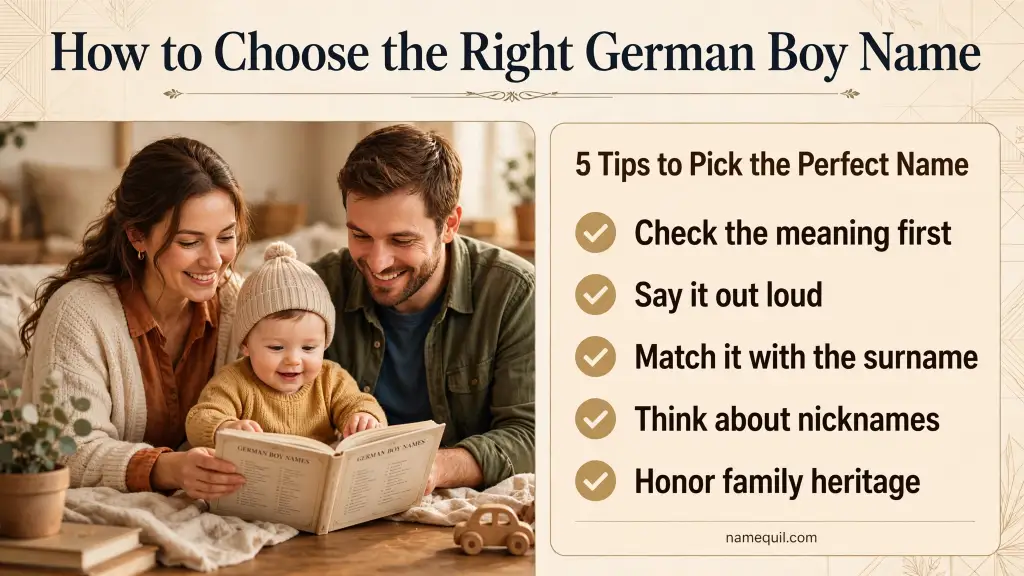
The best name balances meaning, sound, spelling, and personal preference. A name may have a wonderful historical meaning but still feel awkward with your surname or be difficult for family members to pronounce. Comparing a few practical details can help you make a confident choice.
Consider the Meaning
First, decide what you want the name to express.
- For peace: Friedrich or Wilfried.
- For courage: Konrad or Bernhard.
- For leadership: Heinrich or Friedrich.
- For happiness: Felix.
- For nature: Falk or Wolf.
- For a gift-related meaning: Theodor or Matthias.
Remember that a name’s traditional meaning does not define the person who carries it.
Think About Pronunciation
German pronunciation can differ from English pronunciation. For example, the German W in Wilhelm sounds closer to an English V, while Friedrich has a German sound that may take practice for English speakers.
If the name will be used in more than one language, say it aloud in each language. Consider if you like the original pronunciation, an adapted pronunciation, or both.
Match the Name With Your Surname
Say the full name aloud several times. Listen for repeated sounds, awkward rhythm, or difficult consonant combinations. A long first name may pair well with a short surname, while a short first name can balance a longer family name.
For example:
- Felix Weber: Short, clear, and easy to say.
- Konrad Fischer: Traditional with a strong rhythm.
- Theodor Klein: Formal first name with a short surname.
- Leon Hartmann: Modern first name with a traditional surname.
These are illustrative combinations, not claims about actual people.
Decide Between Traditional and Modern
A traditional name such as Heinrich or Friedrich creates a different impression from Ben or Finn. Neither style is better for every family.
Choose a classic name if you value history and heritage. Pick a shorter modern name if you prefer a simple sound. If you want both, names such as Felix, Leon, and Paul may offer a useful middle ground.
Check the Spelling and Origin
Names used in Germany may come from Germanic, Hebrew, Greek, Latin, or other language traditions. If cultural origin is important to you, verify the name’s history rather than assuming every popular German name originated in Germany.
Also check any spelling variants you are considering. Karl and Carl, for example, are related forms, but their spelling may carry different family or regional associations.
German Boy Name Combinations
A first and middle name combination can balance a traditional German name with a shorter or more modern choice. You can also use two names to honor family members or connect different cultural backgrounds.
- Friedrich Leon: Traditional and bold.
- Johann Felix: Classic and cheerful.
- Karl Theodor: Vintage and refined.
- Maximilian Paul: Formal and timeless.
- Konrad Elias: Historic and international.
- Otto Wilhelm: Strong and traditional.
- Leon Friedrich: Modern with a classic touch.
- Felix Heinrich: Friendly and traditional.
- Ludwig Anton: Distinctive and European.
- Theodor Max: Formal with a short ending.
When choosing a combination, say the full name aloud, check its initials, and consider if both names have the same cultural or family significance for you.
FAQs About German Boy Names and Meanings
Q1. What are the most traditional German boy names?
Traditional German boy names include Friedrich, Heinrich, Wilhelm, Konrad, Ludwig, Johann, and Bernhard. Many have long histories in German-speaking communities and are linked to older Germanic or Christian naming traditions.
Q2. What German boy names mean strong?
Names commonly associated with strength or courage include Bernhard, Eberhard, Gerhard, Leonhard, and Konrad. Their meanings come from historical name elements, so the interpretations are not always direct translations of modern German words.
Q3. What German boy names mean peace?
Friedrich, Friedemann, Wilfried, and Gottfried are associated with peace-related meanings. Friedrich is especially well suited to families who want a traditional name that combines peace with leadership.
Q4. What are some short German boy names?
Good short options include Max, Leo, Leon, Karl, Jan, Otto, Kurt, and Falk. Some originated in other languages but have established use in German-speaking communities.
Q5. What are some rare German boy names?
Distinctive traditional choices include Anselm, Falk, Kuno, Wolfram, Luitpold, and Wendelin. Their current frequency varies by location, so check recent regional or national records if rarity is a priority.
Q6. Are all German boy names of German origin?
No. German naming traditions include names from Old High German and other Germanic languages, as well as Hebrew, Greek, Latin, and neighboring European languages. Johann, for example, is a German form of a Hebrew-origin name, while Felix comes from Latin.
Q7. What is a good German boy name that works internationally?
Felix, Leon, Max, Paul, Daniel, and Anton are worth considering. They are recognizable in several countries, although pronunciation and popularity can vary between languages.
Q8. How can I check the true meaning of a German boy name?
Look for a specialist name dictionary, an academic onomastics resource, or a reputable etymological reference. Check the name’s original language and historical form. Be cautious when several websites repeat the same meaning without explaining its linguistic roots.
Conclusion
German boy names and meanings range from powerful historic choices to short, modern names that work well across cultures. Friedrich, Konrad, and Heinrich offer traditional German character, while Felix, Leon, and Max provide a more contemporary feel. For something distinctive, consider Falk, Anselm, or Wolfram.
The best choice is one whose sound, history, and meaning fit your preferences. Verify the origin if cultural accuracy matters, and say the full name aloud before making your final decision.
Explore More Articles:
- Mexican Names That Start With M: Boys, Girls & Unique Names
- Pretty Mexican Girl Names: Beautiful Ideas and Meanings

I’m Olivia Bennett, the author behind namequil.com, where I research names, their meanings, origins, and cultural connections to create simple, helpful naming guides. My goal is to uncover the stories behind names and help readers find one that feels meaningful and memorable.